Podcast: Play in new window | Download
Subscribe: Apple Podcasts | Spotify | Android | Pandora | iHeartRadio | TuneIn | Deezer | RSS
Last updated: August 27, 2026
Trusted by leaders at Stanford University, Ernst & Young, Autodesk, MGM Grand Resorts, and Farmers Insurance
Executive Summary: Most women leaders avoid difficult conversations to protect relationships — and that avoidance is what actually destroys trust. StoneAge CEO Kerry Siggins built the six-step SHARES framework after a piece of brutal feedback changed her leadership. Here’s exactly how it works.
Quick Takeaways:
- Difficult conversations delayed almost always get harder, not easier, over time
- The SHARES framework has six steps you can prepare in under ten minutes
- Organizations with regular feedback see 14.9% lower turnover rates
- Wanting to “be right” is the single biggest killer of workplace trust
- Feedback without a credible next step leaves people hopeless, not motivated
Jump to:
Why It Happens ·
The SHARES Framework ·
Examples ·
Action Plan ·
FAQ
As an executive leadership coach with over 30 years of experience (MA, MFT, PCC) working with Fortune 50–1000 companies, I hear the same confession from brilliant, accomplished women leaders almost every week: “I know I need to have this conversation. I just keep putting it off.” If you’ve been carrying a difficult conversation you haven’t had yet — with a direct report, a peer, a boss, even a spouse — you are in very good company, and it is costing you more than you think.
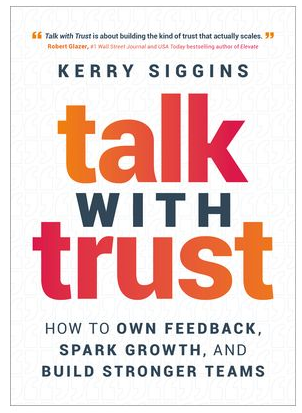
On this episode of the Women’s Leadership Success Podcast, I sat down with Kerry Siggins, CEO of StoneAge (an employee-owned manufacturer of high-pressure water jetting equipment) and author of the new book Talk With Trust: How to Own Feedback, Spark Growth, and Build Stronger Teams. Kerry built her career on hard conversations — including one that nearly ended her leadership before it began. What she learned from it became the SHARES framework, a six-step system for women leaders navigating difficult conversations without torching the relationship in the process.
Why Women Leaders Avoid Difficult Conversations — And What It Actually Costs
Nobody avoids a hard conversation because they’re lazy. Women leaders avoid difficult conversations because they’re afraid of the consequence: a damaged relationship, an angry reaction, a reputation for being “too much.” As Kerry put it on the show, “We’re all not having a conversation that we know we need to have because we’re afraid of the consequences.” The problem is that the consequence of silence is almost always worse than the consequence of speaking.
The research backs this up. Recent workplace data shows organizations with regular employee feedback see 14.9% lower turnover, while highly engaged teams — the kind built through honest dialogue — report 21% greater profitability (Careertrainer.ai, 2026). On the trust side, the numbers are sobering: employer trust fell to 76% in the 2025 Edelman Trust Barometer, and a 21-point gap now separates how much executives trust their organizations (91%) versus how much individual contributors do (70%). Every unspoken conversation widens that gap.
Kerry’s own turning point came from a conversation she didn’t get to control. Her COO — her right-hand operational partner — had been quietly building resentment for a year. It came out in a blowup: “You think you’re this inspiring CEO who disrupts the industry, but really what you are is erratic, and you’re really hard to work for.” Kerry’s instinct was to fire him on the spot. Instead, she went home and sat with it. That single piece of painful, poorly-delivered feedback became the foundation for Talk With Trust — and for the SHARES framework she now teaches leaders everywhere.
Your team is asking themselves this question constantly, whether they say it out loud or not: can I trust you? I broke this down recently on LinkedIn into three pillars — and it’s the exact groundwork that makes a framework like SHARES actually work, instead of just sounding good on paper.

Trust isn’t built in one big moment. It’s built in the small moments people learn they can count on you. — Sabrina Braham, MA, MFT, PCC
Notice how closely this maps to what goes wrong in most difficult conversations. Performance trust breaks when someone overpromises or makes excuses instead of owning a miss. Authenticity trust breaks when someone says what people want to hear instead of what’s true, or hides a mistake to protect their image — the exact trap Kerry’s “articulate your experience” step is built to avoid. And reliability trust breaks when standards shift with someone’s mood, or follow-through only happens when it’s convenient — which is precisely why the SHARES framework’s final step, endorsing a path forward, matters so much: a plan you don’t follow through on costs you more trust than no plan at all.
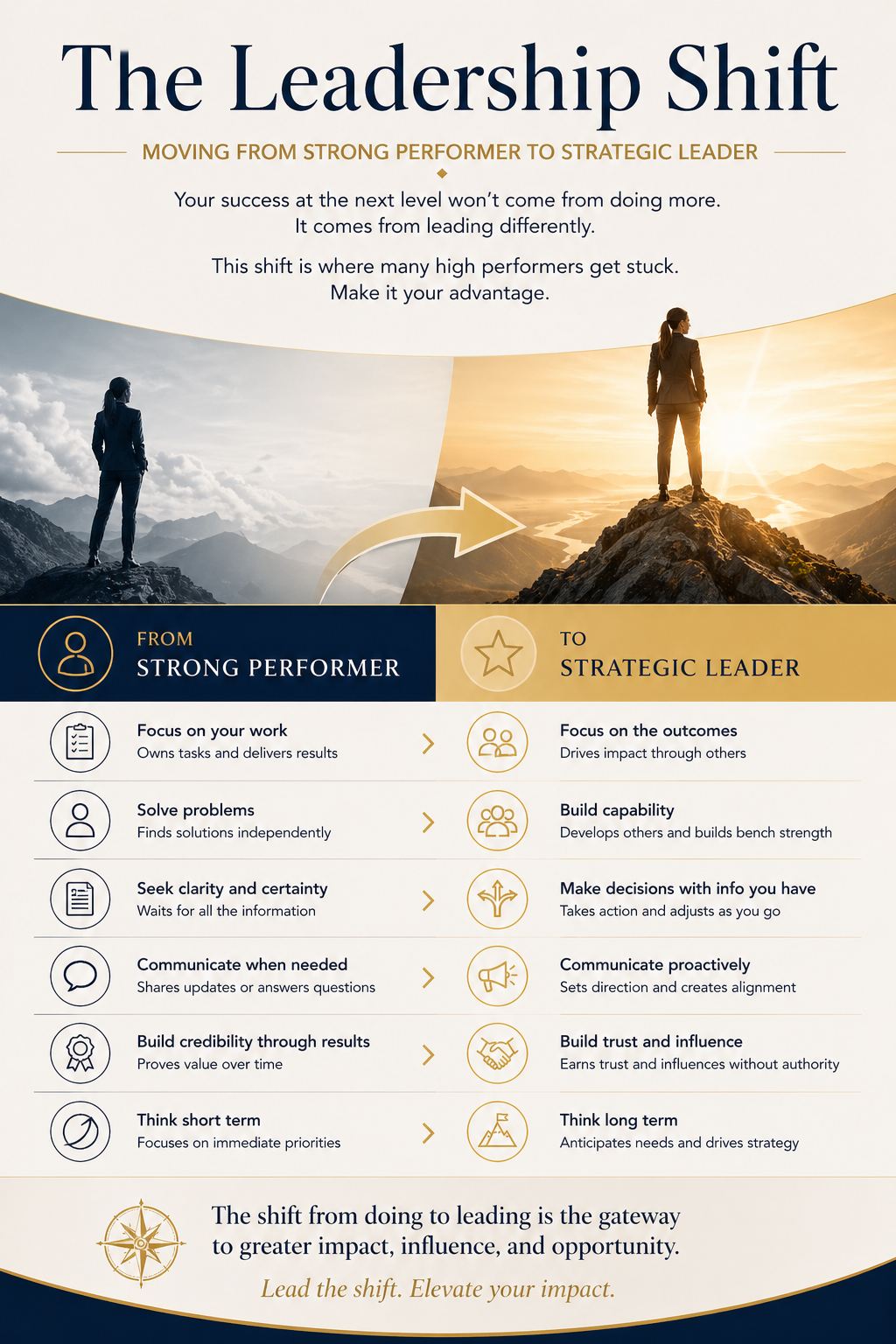
This is the same shift Kerry made the day she got called “erratic” — she stopped waiting to feel ready to lead differently and just did it.
The SHARES Framework: Six Steps for Difficult Conversations That Build Trust
SHARES is a simple, repeatable system women leaders can use to prepare for any hard conversation — a performance issue, a peer conflict, a hard truth with a boss, even a conversation with a spouse. Each letter is a step you move through, in order.
S — Specify Your Ideal Outcome
Before you say a word, get clear on what you actually want from this conversation. Not “to be right” — an actual outcome. “I want to keep this relationship strong. I want to see behavior change. I want this to build trust, not break it.” Kerry’s insight: most difficult conversations go sideways because neither person has named the outcome they’re going for. Stating it out loud — even to yourself — changes everything that follows.
H — Have Your Facts and Feelings Ready
Facts alone feel cold and clinical. Feelings alone feel like an ambush. You need both: the observable behavior (“you were late to this meeting”) and the impact it had (“we waited, and had to repeat ourselves for you, which was frustrating for the team”). Preparing both in advance also does something else important — it gives you time to calm down before you walk into the room.
A — Articulate Your Experience
This is the step Kerry calls her favorite, because it’s the one most leaders get subtly wrong. “I feel like you don’t respect me” still sounds like a judgment wearing an I-statement disguise. Articulating your experience instead sounds like: “I’d like to share my experience of this situation. The story I’m telling myself is that you don’t respect me — and I want to check whether that’s accurate. What was your experience?” Owning your perspective as a perspective, not a verdict, opens the door instead of slamming it.
R — Reflect With Questions and Dialogue
The goal of any difficult conversation isn’t to be right — it’s to be accurate. And the only way to get accurate is to ask questions and actually stay in dialogue. Kerry shared a story of giving tough feedback to an employee who wasn’t a direct report. Rather than delivering a verdict, she asked what was going on. What she learned changed the entire conversation — from correction to genuine understanding, without letting go of accountability.
E — Endorse a Path Forward
Feedback without a credible next step doesn’t motivate people — it leaves them hopeless. Kerry described a boss early in her career who told her she wasn’t getting in front of decision-makers and to “come back with a plan.” She didn’t know how to fix it and didn’t feel safe saying so. She eventually quit. Now she builds the path forward together with the other person: What are you trying? What’s working? What isn’t? That collaborative plan is what turns feedback into change — and what creates real accountability without punishment.
S — Stay Emotionally Grounded
People tend to mirror the emotional energy in the room. If you walk in braced and defensive, you’ll get braced and defensive back. Kerry’s practice: feel your feet on the floor, take a breath, and become “the mirror that calms people down” rather than the one that escalates them. Staying grounded doesn’t mean suppressing emotion in the other person — it means giving them room to have their reaction without matching it.
SHARES in Practice: Three Real Application Examples
The promotion conversation. A director wants to raise her hand for a VP role but suspects her boss has reservations. Using SHARES, she opens with her outcome (“I want clarity on what would make me ready for this role”), shares the facts of her track record alongside how the uncertainty has felt, then asks reflective questions instead of defending her resume — walking out with an actual development plan instead of vague reassurance.
The peer conflict. Two directors keep clashing in cross-functional meetings. Instead of escalating to their shared VP, one initiates a SHARES conversation: names the outcome (a working relationship that doesn’t derail meetings), articulates her experience without accusation, and asks what’s driving the friction from the other side. They leave with a path forward neither would have found by avoiding the topic.
The marriage parallel. As I shared with Kerry on the show, this isn’t only a workplace tool. Simply naming the outcome you want at the start of a hard conversation with a spouse — “I want us to leave this in a better place” — changes the entire trajectory before either person says another word.
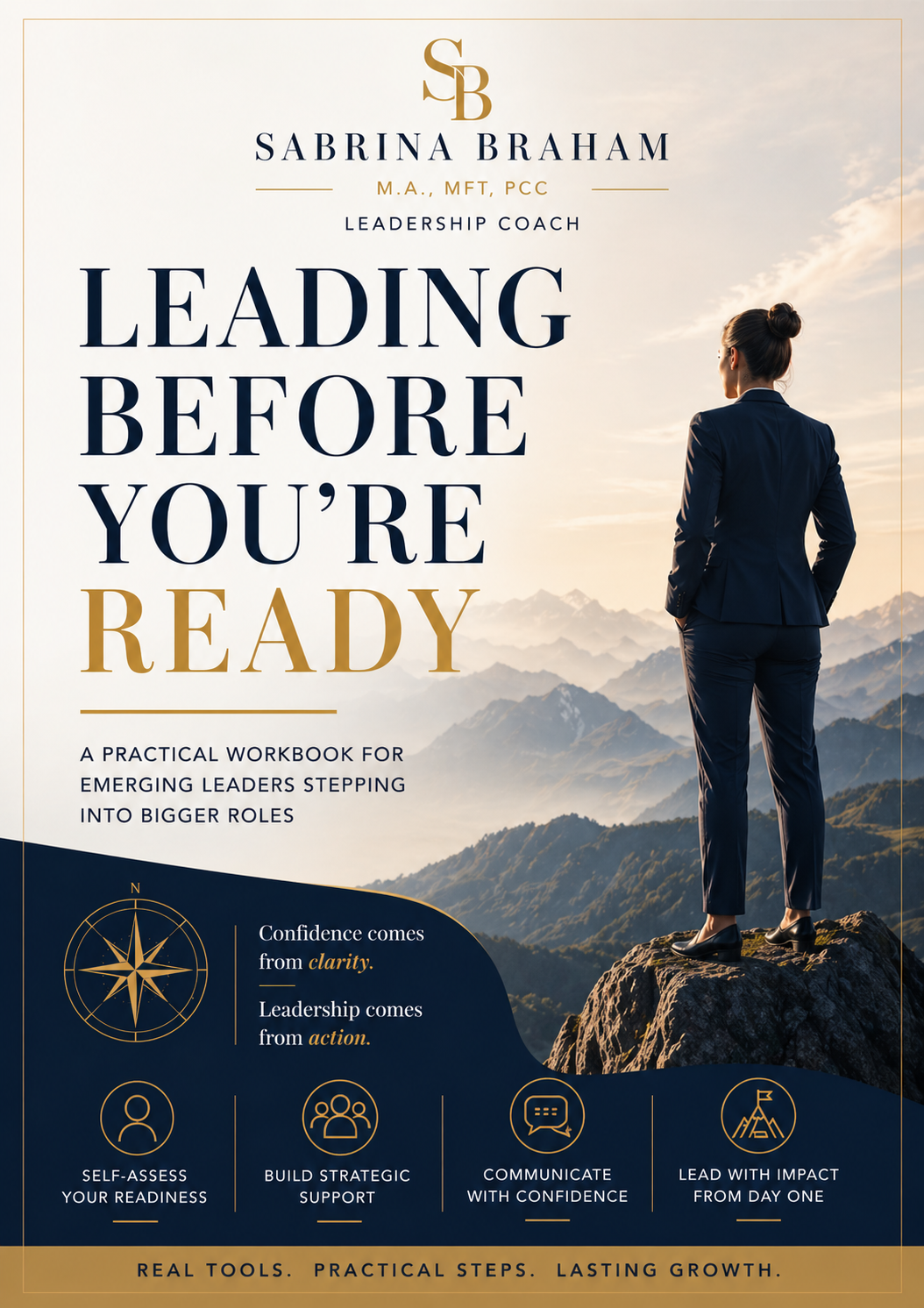
You don’t have to figure this out alone.
The FREE Leading Before You’re Ready Playbook gives you the exact framework to walk into your next leadership conversation — or your next promotion case — with real confidence, even before you feel ready for it.
Implement This Week: Your SHARES Action Plan
- (15 minutes) Name the one difficult conversation you’ve been postponing. Write down the consequence you’re avoiding by not having it — and the consequence of continuing to avoid it.
- (10 minutes) Write your S: specify the outcome you actually want. Not “to be right.” The relationship or result you want on the other side.
- (15 minutes) Draft your H: list two or three observable facts and the impact each one had. Keep it specific, not general.
- (10 minutes) Draft your A: write one sentence that articulates your experience without turning it into a verdict on the other person’s character.
- (5 minutes) Prepare two R questions you’ll ask before you offer your own conclusion.
- (Same day) Ask the other person if now is a good time — and honor the answer if it’s no.
- (Ongoing) After the conversation, follow up within a week to check on the path forward you endorsed together. Success metric: the behavior or relationship has visibly moved, not just been discussed.
Common Mistakes Women Leaders Make in Difficult Conversations
- Rushing in “firm.” Bracing yourself and leading with a rehearsed list of points signals a verdict, not a dialogue — and people brace right back. Ease in instead: “I want to talk about this, and I might not have it all right. I want to understand your side too.”
- Over-explaining instead of listening. Defending your intentions before hearing the other person out tells them you’ve already decided they’re wrong, even if you don’t mean to.
- Giving feedback with no path forward. A verdict without a plan leaves people hopeless rather than motivated — and hopeless people disengage or leave.
- Matching the other person’s emotional energy. If they get defensive or upset and you match it, the conversation escalates instead of resolving.
- Skipping the follow-up. When people give feedback and see no acknowledged change, they stop taking the risk of speaking up again — quietly ending your feedback culture before it starts.
People Also Ask
How do I start a difficult conversation without sounding accusatory?
Open by specifying the outcome you want, not the problem you see. Saying “I want us to leave this stronger, and I want to understand your side” invites dialogue. Leading with the complaint invites defensiveness.
What is the SHARES model for feedback?
SHARES is a six-step framework from Kerry Siggins’ book Talk With Trust: Specify your ideal outcome, Have your facts and feelings ready, Articulate your experience, Reflect with questions and dialogue, Endorse a path forward, and Stay emotionally grounded.
Why do women leaders struggle more with giving direct feedback?
Many high-achieving women carry a “likability complex” — a fear that directness will be read as harshness. The fix isn’t softening the message; it’s pairing directness with genuine curiosity and a clear path forward, which builds trust instead of eroding it.
How long should you wait before having a difficult conversation?
Long enough to get emotionally grounded, not long enough to let resentment build. If you need to process first, say so directly — “I need to think about this, can we circle back tomorrow?” — and then actually circle back.
What should I do if the other person gets defensive or emotional?
Give them space to have the reaction without matching it. Stay grounded, breathe, and let the emotion move through before continuing the dialogue. Their reaction isn’t a signal to abandon the conversation.
Old Approach vs. the SHARES Framework
| Traditional Approach | SHARES Framework |
|---|---|
| Rehearse your points, deliver them firmly | Specify the outcome, stay in dialogue |
| Lead with facts only, or emotion only | Bring both facts and feelings together |
| “I feel like you…” (disguised judgment) | Articulate your experience, own your perspective |
| Explain your position to win the point | Ask questions to get accurate, not right |
| End with a verdict, no next step | Endorse a path forward together |
| Match the other person’s escalation | Stay emotionally grounded, don’t mirror |
What’s New in 2026: The Trust and Feedback Landscape
Three shifts are reshaping how women leaders approach difficult conversations in 2026:
- Trust is becoming the top HR metric. CHROs now rank leadership and manager development as their #1 priority for 2026, with 46% citing it as a top focus — a direct response to falling engagement and manager burnout.
- Recognition and feedback are converging. New workplace data shows employees who give recognition are trusted roughly nine times more than those who don’t, and recognition frequency now predicts turnover months before someone resigns.
- The “black box” is going away. Organizations are moving toward continuous, transparent feedback tied directly to growth and promotion decisions, replacing the once-a-year performance review model that left too many people guessing where they stood.
Summary: Trust Is Built in the Conversations You’re Avoiding
Every difficult conversation you postpone doesn’t disappear — it compounds. Kerry Siggins built the SHARES framework out of the most painful feedback of her career, and it’s now a repeatable system any leader can use to prepare for, and stay grounded through, the hard conversations that actually build trust instead of breaking it. The conversation you’ve been avoiding is very likely the one your next promotion is waiting on.
Your next step starts today.
Download the FREE Leading Before You’re Ready Playbook and get the exact framework to walk into your next hard conversation — or your next leadership role — with real confidence.
- A practical framework for leading before you feel ready
- Scripts you can use this week
- A self-assessment for your next big conversation or opportunity
Loved this episode? Subscribe to the Women’s Leadership Success Podcast, leave a rating and review, and share it with a woman leader who’s been putting off a hard conversation. Curious about part two of this conversation with Kerry — where we dig into how to tell real feedback from noise, and the double bind women leaders face when they speak up? Look for it in your feed next. If you’d like personalized support navigating your own leadership conversations, call 707-481-6850 to schedule a free Leadership & Career Breakthrough Session.
About the Experts
 Kerry Siggins is CEO of StoneAge, an employee-owned manufacturer of high-pressure water jetting equipment, and author of Talk With Trust: How to Own Feedback, Spark Growth, and Build Stronger Teams and The Ownership Mindset. She hosts The Kerry Siggins Podcast and speaks widely on trust, accountability, and ownership culture. Connect with her at kerrysiggins.com or on LinkedIn.
About Sabrina Braham

Sabrina Braham, MA, MFT, PCC, is an executive leadership coach with 30+ years of experience serving Fortune 50–1000 companies including Stanford University, Ernst & Young, and Autodesk. She hosts the Women’s Leadership Success Podcast, ranked in the top 1.5% of podcasts worldwide with 57,000+ monthly downloads.
Continue Your Journey
- Leading Before You’re Ready: The Free Playbook — the companion framework for stepping into leadership before you feel fully ready
- Be a Guest on the Podcast
- Related episode: Part Two with Kerry Siggins — recognizing valid feedback and navigating the double bind (coming next in your feed)