
Podcast: Play in new window | Download
Subscribe: Apple Podcasts | Spotify | Android | Pandora | iHeartRadio | TuneIn | Deezer | RSS
Executive Summary: Most women leaders know AI could accelerate their careers—but don’t know where to start. Executive coach Sabrina Braham and author Barry O’Reilly reveal the Traits, Tasks, and Tools framework that eliminates AI paralysis, builds confidence in unfamiliar leadership roles, and helps women leaders AI career growth into bigger opportunities—starting this week.
Quick Takeaways:
- 69% of women say AI has opened new career pathways—but only for those who start using it now (ANSR Women in Tech Report, 2026).
- The Traits, Tasks, Tools framework reveals how to match AI to the way you personally do your best work.
- Use AI to pressure-test your thinking—never to hand over your judgment. That distinction changes everything.
- Asking AI “What questions should I be asking as a VP?” instantly elevates your perspective without years of experience.
- The worst thing you can do in a time of AI uncertainty is nothing. You must be in it to learn it.
You know you should be using AI. You’ve heard the urgency, seen the headlines, maybe even opened ChatGPT, stared at that blinking cursor—and quietly closed the tab.
Here’s what I want you to know: that moment of hesitation doesn’t mean you’re behind. It means you haven’t yet found your entry point.
I’m Sabrina Braham, executive leadership coach (MA, MFT, PCC) with 30+ years of experience, and host of the Women’s Leadership Success Podcast—top 1.5% globally with over 950,000 downloads. I coach senior women leaders at Stanford, Ernst & Young, Autodesk, and across the tech industry. And one of the most common things I hear from directors, VPs, and C-suite executives right now is: “I don’t know where to start with AI.”
New research backs this up: Chief and The Harris Poll surveyed 1,000+ senior women leaders in 2026 and found that while 85% are active players in their organization’s AI strategy, the approach matters enormously. The leaders who get ahead aren’t the ones who automate the most—they’re the ones who build human capability alongside AI. And according to the ANSR Women in Tech Report 2026, 69% of women who do engage with AI report it opens entirely new career pathways in product strategy, transformation leadership, and AI governance.
In this episode of the Women’s Leadership Success Podcast, I welcome back Barry O’Reilly—author of Artificial Organizations: Build Better Judgment, Speed, and Results with Machine and Human Intelligence, keynote speaker at Gartner’s CFO Conference, and one of the most sought-after AI leadership advisors in the world. Since our last conversation, Barry has been traveling globally—observing how leaders at every level are (and aren’t) adapting to AI. His findings are equal parts sobering and energizing.
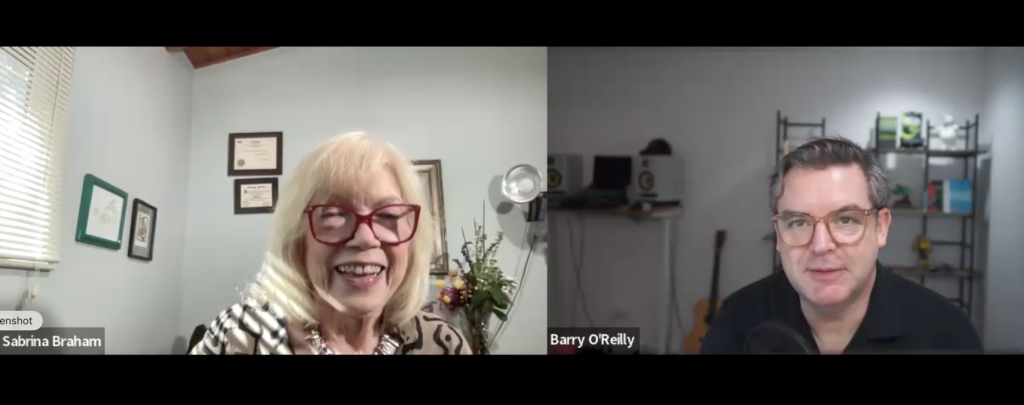
This is Part 1 of a two-part series. Here, we focus on women leaders using AI for personal growth, confidence, and career advancement. In Part 2, we go deeper into how AI can transform your strategic thinking and decision-making as an executive leader.
Why Women Leaders Are Paralyzed at the AI Starting Line
After keynoting Gartner’s CFO Conference and spending months in leadership rooms across North America, Barry reports seeing the same pattern everywhere: hesitation.
“People don’t really know where to start,” he says. “They constantly hear about new tools arriving in the market. They hear that everything they were meant to do last week is no longer the right thing to do this week. And it all leads to hesitation—which, counterintuitively, is the worst possible response.”
I know this directly from my coaching practice. I’ve spoken with women leaders who are brilliant, accomplished, and deeply capable—who are also avoiding AI entirely because they don’t know what to do first. And I understand it, because I was there too. When I first started exploring AI, I treated it as if it were smarter than me—as if whatever it said must be right. That mindset kept me small.
What changed? Doing the exercises in Barry’s book. Going through them shifted me from intimidated observer to active director. Now, AI is my servant—I correct it, challenge it, redirect it. My creative and analytical output has genuinely expanded as a result.
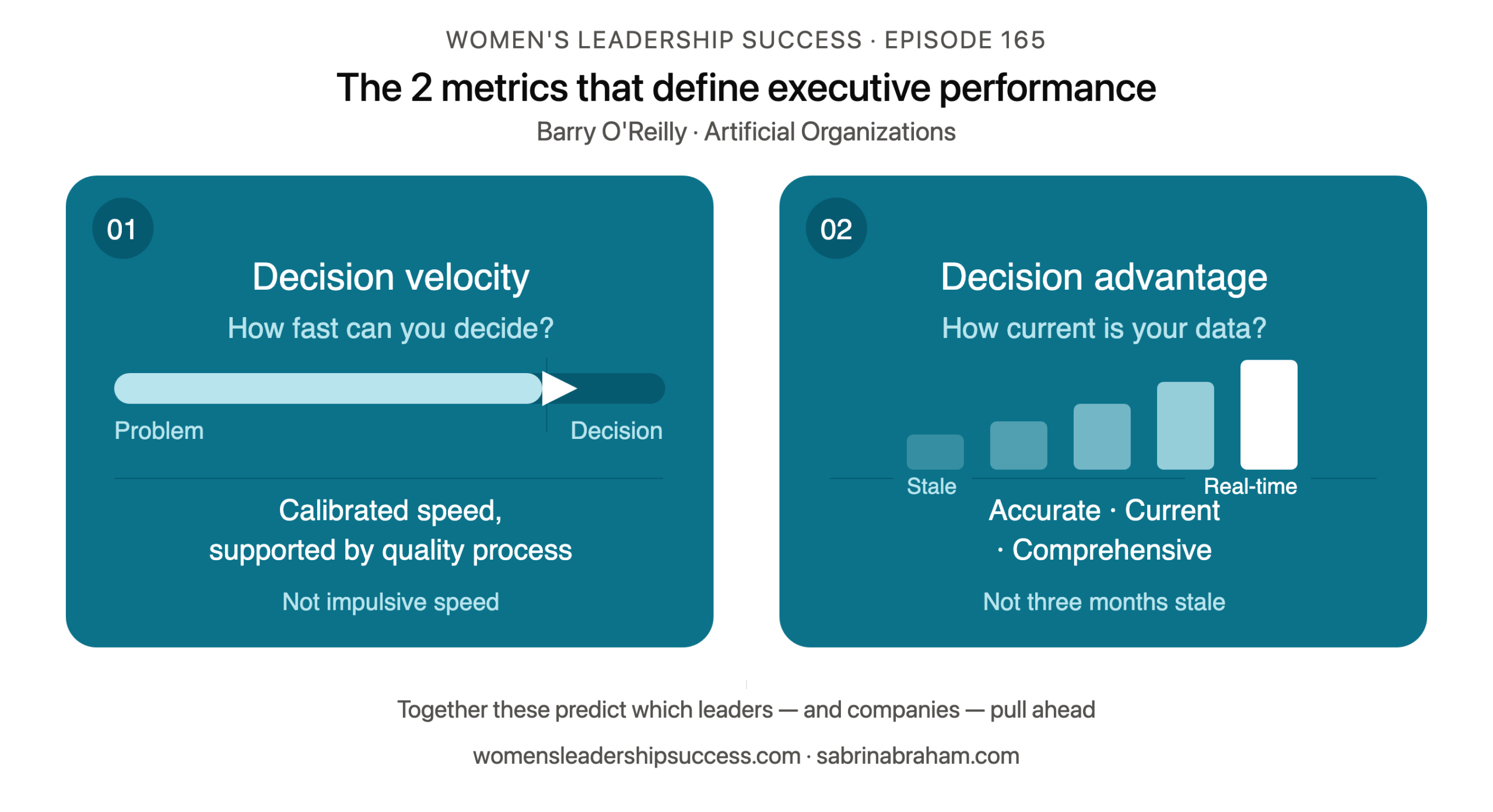
“Counterintuitively, the worst thing you can do when there’s uncertainty is do nothing. Because you don’t learn anything.” — Barry O’Reilly
This matters especially for women in tech, where the stakes are already high. The ANSR 2026 report found that despite women producing 43% of the world’s female STEM graduates, only 14% hold C-suite seats. The gap isn’t pipeline—it’s systems. AI fluency is rapidly becoming one of those systemic differentiators. The women who build it now will have compounding advantage; those who wait will face a steeper climb.
My Leading Before You’re Ready playbook is built on exactly this truth: you don’t wait to feel fully prepared. You use every available tool—coaching, community, AI—to think and show up at the level you’re stepping into.
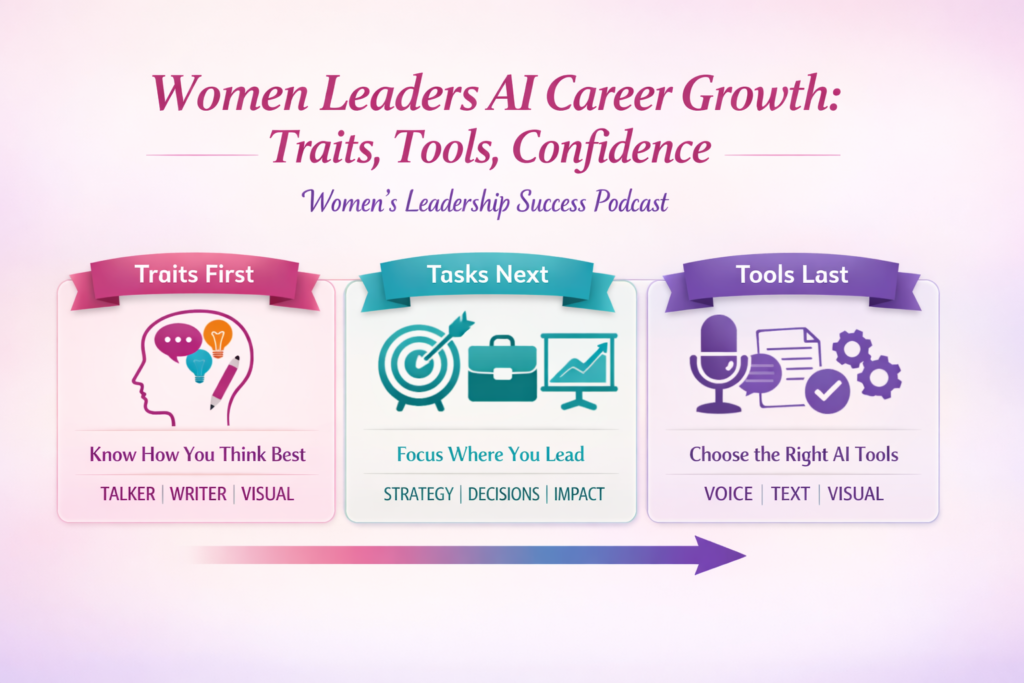
The Traits, Tasks, and Tools Framework: The Smarter Way to Start with AI
Most people approach AI for women leaders career growth backwards. They hear about a tool, jump into it, hunt for something useful to do, get mediocre results, and conclude AI isn’t for them. Barry’s Traits, Tasks, and Tools framework—one of the most referenced frameworks in Artificial Organizations—completely resequences this.
The problem: “Most people with this technology just jump straight into the tool. They try to figure out a task to use it for. And only if ever do they ask themselves how they actually do their best work.” That backwards approach locks you into the tool’s opinions about how work should be done—which may have nothing to do with how you create your best thinking.
Trait-First: Start With How YOU Do Your Best Work
Before you open any AI tool, answer honestly: When do I do my best thinking?
- Are you a talker? Your best ideas emerge in conversation and dialogue.
- Are you a writer? You process and synthesize by putting things on paper.
- Are you a visual thinker? You need diagrams, maps, and frameworks to see clearly.
- Do you need solitude and quiet to generate insight, or energy and people?
Barry’s personal discovery here is instructive. Dyslexic and self-described as a D-student in English literature, he’d spent years trying to write like he imagined writers wrote—sitting quietly, composing prose. “I drank a lot of wine and sat by a lot of fires, but I didn’t create much content.” Once he recognized that his natural trait was talking, everything changed. He hired a journalist to interview him conversationally, used transcription to capture the output, and went from blank pages to 10,000 words of book content in roughly three hours.
That’s not a productivity hack. That’s a trait-matched workflow—and it’s what women leaders using AI for career growth need to build for themselves.
Task-Next: Where Does Your Leadership Create the Most Value?
Once you know your traits, identify the tasks where you create outsized value. Not the email and calendar management—the strategic work that shapes your team, your organization, and your career trajectory. This might be:
- Synthesizing complex information into clear executive recommendations
- Preparing for high-stakes meetings and presentations
- Developing your team’s thinking and capability
- Building strategic scenarios and options for decision-making
- Crafting your executive narrative for visibility and advancement
Tool-Last: Find What Matches Both Your Traits and Your Tasks
Only now do you select tools. Barry matched his “talker” trait and “content creation” task to meeting co-pilots and transcription tools. For women leaders with different trait profiles:
- If you’re a talker preparing for board presentations: Use voice-to-text capture combined with a generative AI to structure and refine your speaking points. Tools like Otter.ai for capture and Claude or ChatGPT for synthesis are a natural combination.
- If you’re a writer preparing strategic memos: Use AI as a sophisticated thinking partner—share your draft, ask it to steelman the opposing view, and challenge every assumption.
- If you’re a visual thinker: Use AI to generate frameworks and then render them in tools like Miro or Canva. Ask AI to “map this decision as a 2×2 matrix” and then build on what it generates.
How AI Builds Leadership Confidence in Unfamiliar Territory
This is the angle I brought to this conversation that Barry told me he’d never considered—and it’s at the heart of what I see women leaders needing most right now.
A director gets promoted to VP. A leader’s company downsizes and she inherits three departments overnight. A high-potential executive gets tapped for a stretch role she doesn’t feel prepared for. These are the moments when imposter syndrome spikes, when visibility feels risky, when the gap between who you are today and who the role requires feels widest.
I asked Barry: “How can women leaders use AI to build their confidence in these transitions?” Here’s how he frames the three levels of AI impact:
- Level 1 – Productivity: You bolt AI onto your existing workflow. Emails are faster, documents generate quicker. Real but modest—5 to 10% improvement.
- Level 2 – Performance: You use AI to pressure-test your thinking and challenge your mindset before high-stakes situations. Your judgment improves, and better decisions follow.
- Level 3 – Executive Presence: AI offloads cognitive load by capturing conversations, tracking decisions, and surfacing context. You arrive at every meeting calm, prepared, and fully present. This is where careers accelerate—and where women leaders using AI for career growth unlock the biggest competitive advantage.
My own experience makes this concrete. I started using AI to help reorganize a storage shed—asking it to help me think through what goes where, what organization system would work best. After three days of working on it together, AI said to me: “You’re getting better at this.” And the following week, when I had a larger project, I didn’t need to check in at all. AI had trained my thinking—not just solved a problem for me.
That’s the meta-skill. AI doesn’t just do the task. It teaches you to think at a higher level.
The Most Powerful Prompt for Women Leaders in Transition
When I got my first inquiry to sell dahlia arrangements for a neighbor’s bridal shower—something I’d never done professionally—instead of bluffing or backing down, I asked AI: “If I’m a florist designing flowers for someone, what are the questions I need to ask?”
Instantly, I had questions I never would have generated on my own. I showed up to that conversation asking like a professional. “That just moved me up a level, even though I have no experience.”
Apply this pattern directly to leadership transitions:
- “I’ve just been promoted to VP. What questions should I be asking in my first 90 days that a Director wouldn’t think to ask?”
- “I’ve inherited the finance department and I’ve never led finance before. What does an experienced finance VP look for in a weekly team review?”
- “I’m preparing my first board presentation. What questions do board members most want answered—and what format earns the most credibility?”
- “What does a strong Chief of Staff look for when evaluating whether a VP is executive-level ready?”
Each of these prompts does what I teach in my Leading Before You’re Ready playbook: it bridges the gap between where you are today and where the role requires you to be—immediately, confidently, and without waiting for years of experience you don’t yet have.
The Meeting That Changes How Leaders See You
One of the most career-defining insights from Barry’s global advisory work is deceptively simple: the leaders who rise fastest are those who show up to meetings ready to make decisions—not just talk about them.
At Progeny, the leading provider of fertility benefits in the US, Barry worked with teams reporting to a highly detail-oriented, high-expectation CEO named Pete. The team created what they called a “Pete Bot”—an AI model built on Pete’s decision criteria, priorities, and communication style. Before any high-stakes meeting with Pete, they would run their preparation through this simulation. They’d practice. They’d surface the questions Pete would ask before he asked them. They’d arrive with data.
“The quality of all those meetings started to increase,” Barry explains. “You’re actually meeting to make decisions—not just to talk about information and then reach no decision.”
I tell every leader I coach: if you don’t learn how to show up this way, you will get left behind. The leaders who stand out in 2026 are those who arrive at every meeting with:
- The three decisions they want to make
- The data they’ve already gathered to support their position
- The perspectives they’ve already considered and addressed
- Clear, specific asks of the senior leaders in the room
AI makes this kind of preparation available to every leader, at every level. You don’t need an executive assistant or a team of analysts. You need 30 minutes before your most important meeting, a good prompt, and the discipline to use it.
Women Leaders AI Career Growth: Your 5-Step Action Plan This Week
Barry’s most practical advice: “Set aside a little bit of time each week. Pick one skill, one meeting, one decision—and experiment with a different way of working.” Here’s how to make that concrete:
- Map Your Dominant Trait (15 minutes): Write down 3 recent moments when you felt most clear, creative, or effective. What were you doing? Talking? Writing? Walking? Visualizing? That’s your starting trait for AI tool selection. Don’t guess—observe.
- Name One High-Value Task (15 minutes): What single task, if you did it 30% better or faster, would most accelerate your career this quarter? That becomes your first AI use case. Be specific: “preparing for my monthly leadership team meeting” beats “be more productive.”
- Run the “What Questions Should I Ask?” Prompt (30 minutes): Pick one area where you feel like a novice—a new domain, a level you’re growing into, a skill you haven’t fully developed. Ask AI: “If I were an experienced [role], what questions would I be asking about [specific situation]?” Use those questions in your next relevant conversation and notice what shifts.
- Reframe Your Next Key Meeting (30 minutes before the meeting): Give AI your meeting context, your goals, and the people involved. Ask: “What are the three most important decisions I should aim to make in this meeting? What data would strengthen my position on each?” Show up with that preparation and watch how the room responds differently to you.
- Join a Learning Community (ongoing): The leaders accelerating fastest with AI aren’t learning alone. They’re in mastermind groups, peer networks, and communities where they share what’s working. (More on this in Part 2 of our conversation.) Consider Sabrina’s Impact Executive Leadership Mastermind as your community for this work.
People Also Ask: Women Leaders and AI Career Growth
How can women leaders use AI to advance their careers in 2026?
Start with the Traits, Tasks, and Tools framework: identify how you naturally do your best work (your traits), name the leadership tasks that create the most value for your career (your tasks), then choose AI tools that accelerate both. Use AI to pressure-test your thinking—not to generate answers you’d otherwise develop yourself. That’s what creates compounding career advantage.
What’s the best AI tool for women executives who are just starting out?
The best tool matches your personal working style. If you think best by talking, start with a meeting transcription and summary tool like Otter.ai or Fireflies, paired with Claude or ChatGPT for synthesis. If you think best by writing, use a generative AI as a thinking partner for your most important strategic documents. Start with one tool for one task before expanding—specificity beats breadth when building AI fluency.
How does AI help women leaders build confidence in a new role?
AI acts as a 24/7 thinking partner that helps you ask better questions and see the perspective of someone more experienced than you. Ask it “What questions would an experienced VP be asking in my situation?” to instantly elevate your thinking. Over time, working with AI at a high level teaches you to think more strategically—not just to execute faster. Confidence grows with capability, and capability grows with repetition.
Will AI replace women leaders in the tech industry?
Barry O’Reilly puts it sharply: “AI is not going to replace leaders—it’s going to expose them.” Leaders who defer all judgment to AI will atrophy their decision-making. Leaders who use AI to sharpen their judgment will build an irreplaceable competitive advantage. The solution is to build your AI fluency now, with the right frameworks, rather than waiting until the gap becomes harder to close.
How can I use AI to prepare for a promotion or job interview?
Use AI to research what success looks like at the next level: what decisions does a leader in that role make? What criteria do hiring managers and boards use? Then simulate: create a “hiring manager bot” with the decision criteria of your ideal interviewer, and practice your answers against it. Sabrina’s Leading Before You’re Ready playbook provides the leadership mindset framework to pair with this technical preparation.
AI Career Growth for Women Leaders: Old Approach vs. Strategic 2026 Approach
What’s New in 2026: AI Fluency as the Career Differentiator for Women Leaders
The conversation around women leaders and AI has shifted decisively. Here are the trends shaping career advancement right now:
- AI governance as a leadership track: New roles—Responsible AI Officer, AI Governance Lead, Head of AI Ethics—are formalizing across enterprise tech. These roles favor leaders who combine executive credibility with AI literacy. Women leaders who develop this combination now are entering a category with limited competition and growing demand.
- Agentic AI moving from pilot to operational: AI agents that autonomously take multi-step actions are no longer theoretical. Leaders who understand how to direct, govern, and evaluate AI agents will hold significant organizational leverage in 2026.
- Human-AI collaboration as a promotion criterion: 85% of senior women leaders now believe organizations that invest in both AI and human development will outperform those focused on technology alone. Boards are beginning to evaluate leadership candidates on their ability to model this balance for their teams.
- Peer learning accelerating faster than solo learning: Barry’s most consistent finding from his global advisory work is that the leaders moving fastest with AI are doing it in community—masterminds, peer cohorts, cross-functional groups. More on this in Part 2.
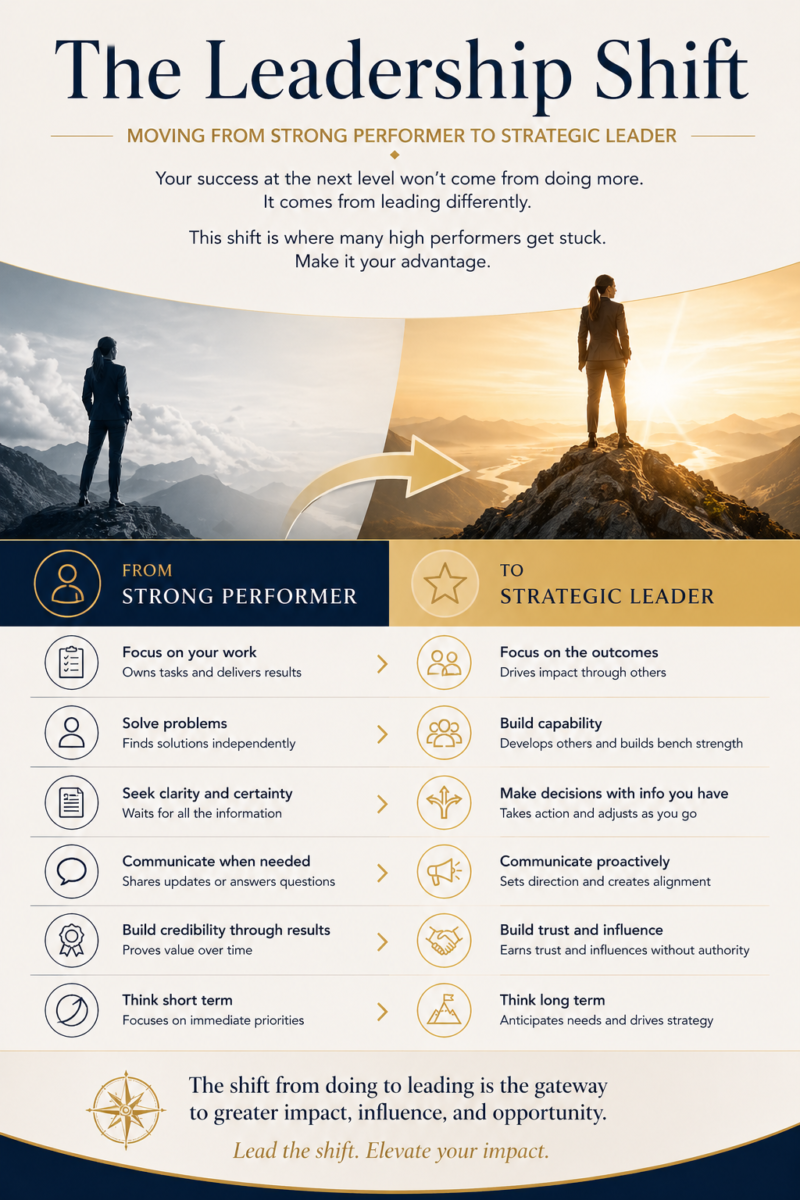
Your leadership brand is your most powerful career accelerator.
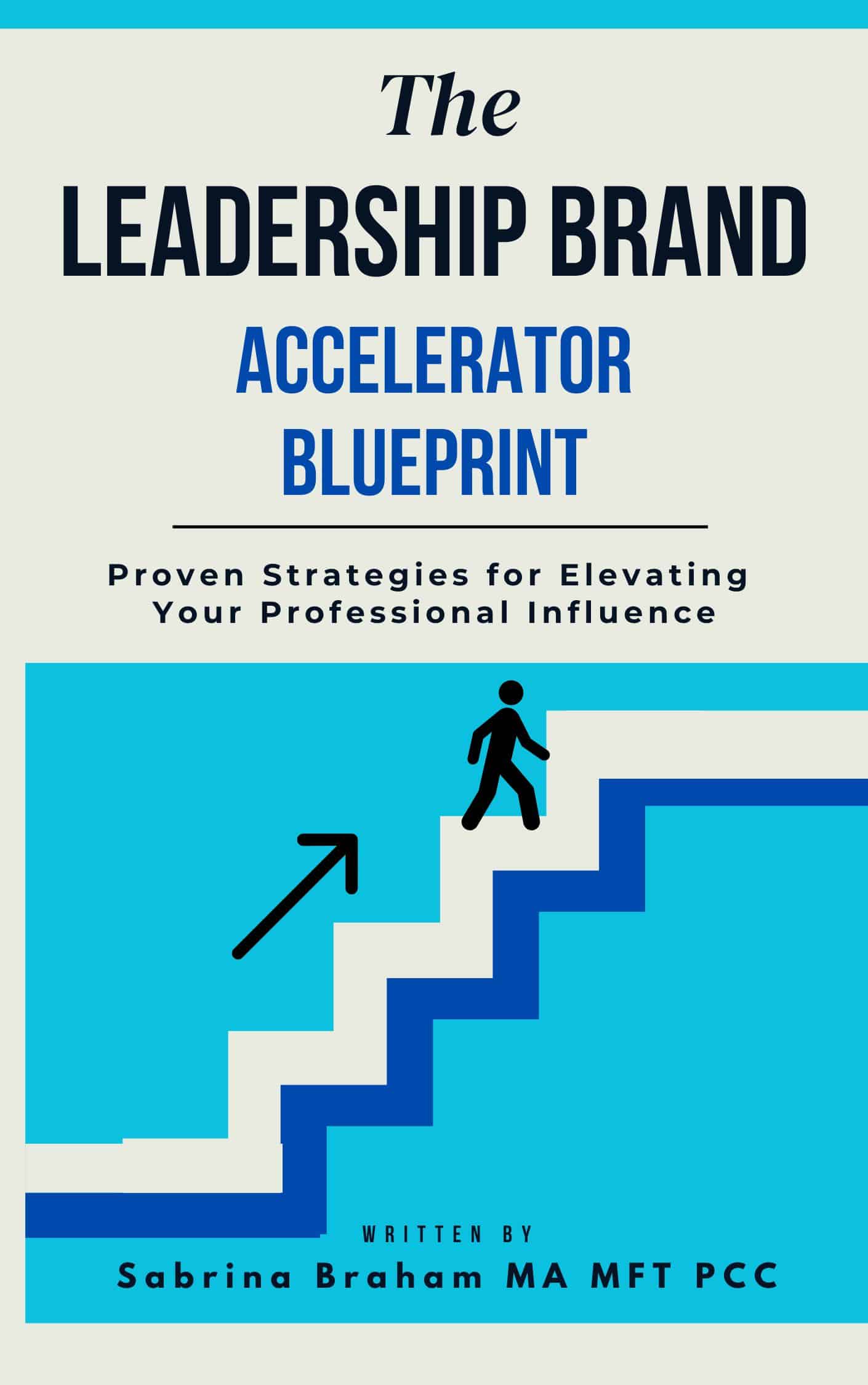
Download Sabrina’s FREE Leadership Branding Blueprint Accelerator and build the executive visibility that makes decision-makers notice you—before you even walk in the room.
- Define the leadership brand that makes you the obvious choice
- Build a LinkedIn presence that positions you for senior roles
- Stand out as a top candidate in a competitive AI-era market
- Step into your next role with the confidence of someone already there
Download the FREE Leadership Branding Blueprint Accelerator Now
Common Mistakes Women Leaders Make With AI (And How to Avoid Them)
- Mistake #1: Starting with the tool instead of your traits. Opening AI without knowing your own working style produces generic output that doesn’t leverage your strengths. Fix: Do the Traits, Tasks, and Tools self-assessment before choosing any tool.
- Mistake #2: Asking AI for the answer instead of for perspective. Every time AI makes the judgment call for you, you weaken your own decision-making capability. Barry is emphatic: “You’re not asking for the answer—you’re asking it to pressure-test your thinking.” That distinction is everything.
- Mistake #3: Waiting until you feel ready to start. The learning only happens through doing. There is no amount of AI articles you can read that replaces 30 minutes of actually using the tool on something that matters to you.
- Mistake #4: Using AI only for low-stakes tasks. The biggest return comes from applying AI to your most important work: board presentations, strategic decisions, career-defining meetings. Start experimenting there, not just on email drafts.
Ready to Lead Before You Feel Ready?
The women who will lead in 2026 aren’t waiting to feel qualified. They’re using every resource available—coaching, community, and yes, AI—to think at the level they’re stepping into.
As I said to Barry at the end of our conversation: “There’s no way to learn this if you don’t start.” Your first step doesn’t need to be perfect. It needs to be real.
Pick your dominant trait. Choose one high-value task. Open Claude or ChatGPT and ask the question that moves you from novice to confident in your most unfamiliar leadership territory. Do it this week.
And in Part 2 of our conversation, Barry and I go deeper into how AI can transform your strategic thinking, your decision-making system, and your long-term leadership impact as an executive.
About Barry O’Reilly
Barry O’Reilly is the author of Artificial Organizations: Build Better Judgment, Speed, and Results with Machine and Human Intelligence (2026, Amazon). A globally recognized executive advisor, keynote speaker, and co-founder of ExecCamp, Barry has helped C-suite leaders across industries build AI-ready organizations and judgment systems. He keynoted Gartner’s CFO Conference and has worked with Fortune 500 leadership teams worldwide. Connect at barryoreilly.com.
About Sabrina Braham, MA, MFT, PCC
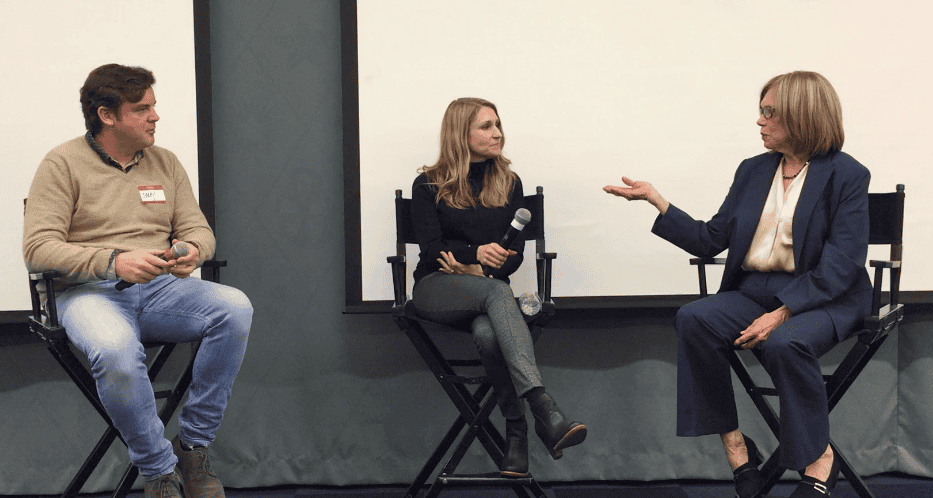
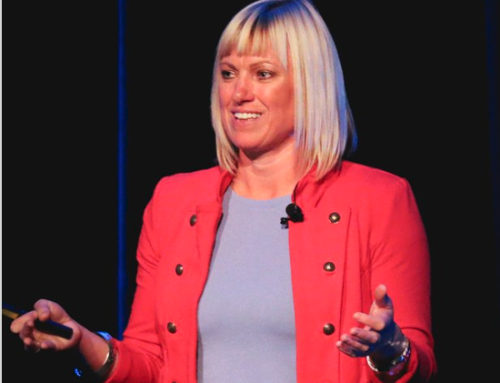
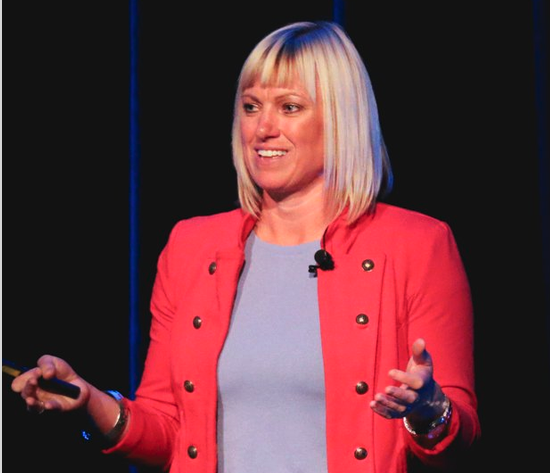
Barry & Sabrina – featured panelists at YELP conference
Sabrina Braham is an executive leadership coach with 30+ years of experience and the host of the Women’s Leadership Success Podcast—top 1.5% globally with 950,000+ downloads. Her clients include Stanford University, Ernst & Young, and Autodesk. She is the author of the Leading Before You’re Ready playbook and creator of the Leadership Branding Blueprint Accelerator. Learn more about Sabrina.
Continue Your Leadership Journey
- Part 2: AI Will Expose Your Leadership—Or Elevate It (Episode 164)
- AI Executive Productivity for Women Leaders (Episode 151, Part 1 with Barry O’Reilly)
- AI Executive Workflow Automation: 90-Second Systems (Episode 152, Part 2)
- Leadership Branding Blueprint Accelerator (Free Download)
- Executive Coaching for Women Leaders