
“Your manager has a bigger effect on your mental health than your therapist ever will.” In Part 2 of my conversation with former McKinsey partner Ashish Kothari, you’ll learn why, and how to prevent team burnout even when the culture above you isn’t on your side.
Executive Summary
Manager engagement fell to 22% in 2025 (Gallup, 2026), and most teams use only 20–30% of their potential. Former McKinsey partner Ashish Kothari’s PEARL model shows how to prevent team burnout and build high-performing teams, even when you can’t change the culture above you.
Quick Takeaways
- High-performing teams tap 70–80% of their potential; most teams tap 20–30%.
- PEARL stands for Purpose, Energy, Adaptability, Relationships, and Life force.
- Your immediate manager shapes your well-being more than your CEO does.
- Building 20% slack into calendars can lift team performance almost immediately.
- Every leader chooses: transmit pressure from above, or transform it.
In This Article
- The Manager Crisis Behind Team Burnout
- What McKinsey’s Transformations Were Missing
- The PEARL Model: 5 Ways to Prevent Team Burnout
- Can You Prevent Team Burnout Without Executive Support?
- 3 Manager Moves to Start This Week (Plus a Bonus)
- Common Mistakes to Avoid
- Wellness as a Benefit vs. Flourishing as a Strategy
- What’s New in 2026
- People Also Ask
Last updated: [PUBLISH DATE], 2026
Trusted by leaders at Stanford University, Ernst & Young, Autodesk, MGM Grand Resorts, and Farmers Insurance
The Manager Crisis Behind Team Burnout
As an executive leadership coach with more than 30 years of experience (MA, MFT, PCC) and host of the Women’s Leadership Success Podcast, now in its 19th year with 57,000+ monthly downloads, I work with directors and VPs who are trying to prevent team burnout while running on empty themselves.
The 2026 data explains why that is so hard. Gallup’s State of the Global Workplace 2026 found global engagement fell to 20%, the lowest since 2020, at an estimated cost of $10 trillion in lost productivity. The driver was managers. Manager engagement dropped from 27% to 22% in a single year, and nine points since 2022.
Microsoft’s Work Trend Index (2025) described an “infinite workday,” with knowledge workers interrupted about every two minutes, or roughly 275 times a day. Team leaders absorb pressure from above while protecting the people below.
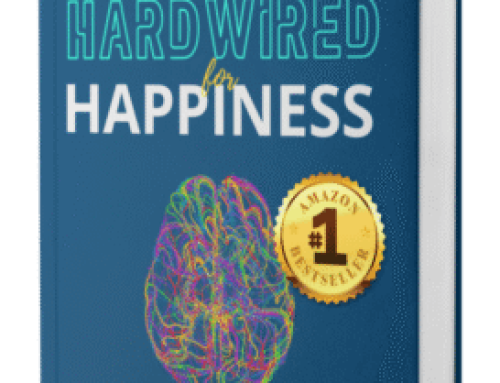
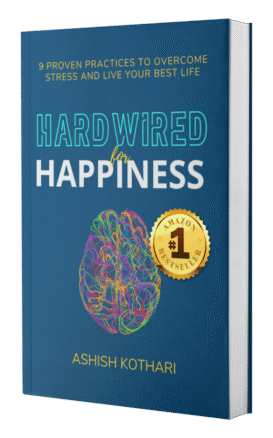
Here’s the good news from Part 2 of my conversation with Ashish Kothari, founder of Happiness Squad, former McKinsey & Company partner, and author of Hardwired for Happiness: 9 Proven Practices to Overcome Stress and Live Your Best Life. You have far more power to prevent team burnout than you think, even if the culture above you is not on your side.
If you missed Part 1 (WLS 171), Ashish shared how he moved from “miserably successful” to “joyfully significant.” Today, he turns that same lens on teams.
What McKinsey’s Transformations Were Missing
Ashish spent 17 years at McKinsey leading operations transformations that touched 10,000 to 50,000 people. One client went from negative 10 EBIT to positive 60 EBIT on a billion-dollar base in 18 months.
Yet he noticed a blind spot.
“All of that work was actually missing the human.” — Ashish Kothari
The real difference between average and high-performing teams was how much human potential they unlocked.
“Most teams tap less than 20–30% of the potential of the team members. High-performing teams operate at 70–80%.” — Ashish Kothari
To close that gap, Ashish combined research from the University of Michigan’s Center for Positive Organizations, Oxford, Gallup, Harvard, and McKinsey’s own work on organizational performance and health. The result is a model his wife, Lizzie, named.
The PEARL Model: 5 Ways to Prevent Team Burnout
Think about how a pearl forms. A grain of sand irritates an oyster, and the oyster transforms it into something of value. Organizations are full of daily irritants: disagreements, demands from the top, economic shocks, supplier and customer issues. High-performing teams transform that friction into value. Here is how they prevent team burnout while doing it.

P — Purpose
Every company has a purpose statement, but people three to five levels down rarely feel connected to it. High-performing teams give meaning to daily work. Sometimes that means linking tasks to the company’s bigger “why.” Often it means a leader asking, “What excites you? Where are you going in your life? How can I help you win here?”
E — Energy
Is your workplace net-energy positive? Do people look forward to Monday or dread it? Ashish highlighted three energy builders:
- Appreciation. McKinsey research Ashish cited found feeling valued by your employer and boss ranks among the things people want most.
- Compassion. Everyone carries private struggles. Is there room for grace on a hard day?
- Constructive conflict. Innovation comes from different points of view colliding productively, not from polite agreement.
A — Adaptability
Humans can keep growing in value, yet many stall because there’s no space to learn. High-performing teams know each other’s strengths and build learning into the work.
When I asked how to discover strengths without a formal assessment, Ashish suggested the free VIA Character Strengths survey and the Reflected Best Self Exercise. The key: ask your colleagues what they see in you. “You can’t see the outside of a jar from the inside,” he said.
R — Relationships
People should belong because of who they are, not because they fit in. That takes trust and psychological safety. In practice, leaders speak last, invite dissent even after the team leans toward a decision, and ask, “What are we missing? How could we be wrong?” Ashish pointed to Crocs’ motto, “Come as you are,” as the spirit of it.
L — Life Force
This is the element Ashish says almost nobody talks about. Life force asks two questions. Are you designing work so people can be at their cognitive best? And are you teaching people to make stress an ally?
Back-to-back meetings leave no room for deep work, thinking, or emergencies. So emergencies land on top of a full calendar and stress multiplies. High-performing teams prioritize ruthlessly, clarify roles, respect boundaries, and design recovery into the day, the month, and the year. As Ashish noted from his work with elite athletes, Olympians are made as much by how they recover as by their hours on the mat.
The Business Case
Ashish cited research showing organizations that invest in these elements outperform peers by 2–3.5% in shareholder returns, with about 20% higher profitability and productivity and up to 60% lower attrition. Put simply, the effort to prevent team burnout is a performance strategy, not a perk.

Want a leadership team that thrives under pressure?
I coach executives and leadership teams to prevent team burnout, build trust, and deliver more with less friction.
Individual Executive Coaching
- Protect your own energy while leading through pressure
- Shield your team from pressure instead of passing it down
- Get recognized for the high-performing team you build
Leadership Team Coaching
- Assess what’s draining your team’s energy and performance
- Run a CliftonStrengths team session to unlock hidden potential
- Design calendars, roles, and recovery for sustainable performance
Ready to go deeper? Book a 1-hour coaching and discovery session on Zoom ($499, 100% credited toward coaching if we’re a fit).
Trusted by leaders at Stanford University, Ernst & Young, Autodesk, and Farmers Insurance.
Can You Prevent Team Burnout Without Executive Support?
This is the question I hear most from managers and directors. Ashish’s answer is yes, and the data backs him up.
People rarely quit because of a CEO. They quit because of their immediate boss. Ashish shared a line someone once said to him: your manager has a bigger effect on your mental health than your therapist ever will. Citing McKinsey Health Institute research, he explained that most of what drives well-being and burnout sits at the job, team, and organization level, and the majority of that is at the job and team level. That’s your sphere of influence.
McKinsey Health Institute’s global burnout research also found toxic workplace behavior was the single biggest predictor of burnout symptoms and intent to leave. Individual resilience helps, but it cannot fully compensate for an unhealthy environment. That’s why your choices as a team leader matter so much.
“Help My People Dance in the Rain”
Ashish described a leader who called him about her deeply toxic organization. She couldn’t change the system, but she was responsible for her people. She asked him to help her team “dance in the rain.”
Together they ran a 12-month journey. Each person built habits for adaptability and resilience, and she redesigned what was within her control. She created space to speak truthfully, ask for support, share strengths, and help each other succeed. It didn’t fix the whole company. But, like the boy throwing starfish back into the sea, it made a difference to the people in her care.
“Do you want to be a transmitter of what comes from the top? Or do you want to be a transformer?” — Ashish Kothari
Ashish also cited Bob Chapman, former CEO of Barry-Wehmiller, who realized every employee is someone’s child, entrusted to the company’s care.
3 Manager Moves to Prevent Team Burnout This Week (Plus a Bonus)
These steps work whether you lead four people or 4,000. I’ve added time estimates and success metrics.
Move 1: Discover Each Other’s Strengths (60 Minutes)
Run a team session where each person shares their strengths, from CliftonStrengths, VIA, or Reflected Best Self feedback. Then discuss how each person can use more of their strengths every day. Success metric: each team member names one task to shift toward a strength within 30 days.
Coach’s Note
As a CliftonStrengths coach, I see this session change team dynamics faster than almost anything else. Friction that felt personal often turns out to be two strengths working at cross-purposes. Once the team names it, they can use it.
Move 2: Ask “What Drives You?” (20 Minutes per Person)
In your next one-on-ones, ask: What excites you? What are you solving for in your life right now? Then really listen, and look for ways to help through stretch work, connections, or support. Success metric: one concrete commitment per person.
Move 3: Mentor or Sponsor Someone (30 Minutes a Month)
Find someone to mentor or sponsor, and find someone to sponsor you. Many people feel no one at work cares about them. Show them you do. Success metric: one active mentoring or sponsorship relationship within 30 days.
This matters especially for women. Women in the Workplace 2025 found that when women receive the same sponsorship and career support as men, the gap in ambition to advance disappears.
Bonus Move: Run the 20% Slack Experiment (45 Minutes)
In manufacturing, nobody loads a machine past 80% capacity, because surges would break the system. Yet most managers run calendars at 100%. Ask your team:
“What would it look like if we could operate with 20% slack?” — Ashish Kothari
Ashish’s design: keep 20% of the calendar unscheduled, block 20% for the top one to three priorities of the week or quarter, and use the remaining 60% as needed. “It’ll change the performance of your team. Tomorrow,” he said. Success metric: two weeks of protected 20% blocks on every calendar. It’s the simplest way I know to prevent team burnout without new budget.

Try This Now (5 Minutes)
Open next week’s calendar. Find one recurring meeting you can shorten or cancel, and block that time as protected focus for your team’s number-one priority. You’ve just started your 20% slack experiment.
Common Mistakes to Avoid
Mistake 1: Treating Well-Being as a Perk
Wellness apps can’t fix role confusion. To prevent team burnout, fix team design first.
Mistake 2: Waiting for Permission From the Top
Most of what shapes well-being sits at the team level. Don’t wait for a culture initiative.
Mistake 3: Mistaking Harmony for Health
Teams that never disagree aren’t safe; they’re silent. Invite dissent.
Mistake 4: Ignoring Recovery
Weekends aren’t a recovery plan. Build breaks into the day, month, and year.
Mistake 5: Assuming People Know Their Strengths
Many people are blind to their own gifts. Ask, don’t assume.

Leading a team through pressure you didn’t create?
Download the complimentary Leading Before You’re Ready playbook and discover:
- How to lead with confidence when the culture above you is unsettled
- Simple ways to make your team’s wins visible to senior leaders
- How to position yourself for promotion while protecting your people
Wellness as a Benefit vs. Flourishing as a Strategy
| Traditional Approach | High-Performing Team Approach |
|---|---|
| Wellness offered as an HR benefit | Flourishing treated as a business strategy |
| Calendars loaded to 100% | 20% slack built in for surges |
| Leader speaks first | Leader speaks last and invites dissent |
| Fit in to belong | Belong because of who you are |
| Recovery happens on weekends | Recovery designed daily, monthly, yearly |
| Manager transmits pressure downward | Manager transforms pressure into value |
| Kaizen for factories only | Kaizen applied to how we work |
| 20–30% of team potential used | 70–80% of team potential used |
What’s New in 2026: Why Leaders Must Prevent Team Burnout Now
Managers Are the New Burnout Frontline
Gallup’s 2026 report shows managers lost their engagement advantage, dropping to 22%. Yet best-practice organizations keep about 79% of managers engaged. The gap is design, not destiny.
“Quiet Cracking” Hides in High Performers
Quiet cracking describes employees who keep delivering while losing motivation and purpose. Because output stays high, leaders miss it. PEARL’s energy and life-force questions surface it early.
The Infinite Workday Meets AI
Microsoft’s research shows meetings crowding out deep work. Gallup also found manager-led AI adoption is one of the strongest drivers of frequent AI use. Leaders who use AI to give back focus time, not add tasks, will win on both performance and well-being.
Senior Women Are Carrying Extra Load
Women in the Workplace 2025 reported frequent burnout among about 60% of senior women. Women leaders often prevent team burnout for others while absorbing it themselves. PEARL applies to your own calendar too.
People Also Ask
How can managers prevent team burnout?
Start with what you control: clarify roles and priorities, protect focus time, build in recovery, and create psychological safety. Ashish Kothari’s PEARL model (Purpose, Energy, Adaptability, Relationships, Life force) gives managers a practical checklist.
What is the PEARL model for high-performing teams?
PEARL is Ashish Kothari’s framework for turning everyday workplace friction into value. It stands for Purpose, Energy, Adaptability, Relationships, and Life force, drawn from research at Michigan, Oxford, Gallup, Harvard, and McKinsey.
Can I improve my team’s well-being if senior leadership doesn’t support it?
Yes. Most well-being and burnout drivers sit at the job and team level, where your direct manager has the most influence. You can buffer your team from wider toxicity even without top-down change.
What is the 20% slack rule for teams?
It means keeping about 20% of calendar time unscheduled for surges and emergencies, just as factories avoid running machines above 80% capacity. Ashish pairs it with blocking 20% for top priorities.
What percentage of their potential do most teams use?
According to Ashish Kothari’s work, most teams tap only 20–30% of their members’ potential, while high-performing teams operate at 70–80%.
How do I find my team members’ strengths without an assessment?
Use the free VIA Character Strengths survey or ask colleagues directly what each person is like at their best. Others often see strengths we can’t see in ourselves.
Looking Ahead
Ashish’s thesis: commit to flourishing as a strategy for three to four years, and everything you execute goes faster, because people execute every strategy. I expect the leaders who prevent team burnout to become the leaders organizations promote.
The Bottom Line
You can’t control everything above you. You can control the environment you create. Give your team purpose, energy, room to grow, real belonging, and the space to do their best work. As Ashish puts it, choose to be a transformer, not a transmitter. That’s how you prevent team burnout and build a high-performing team, one person at a time.
Ready to lead a team that thrives, and get recognized for it?
Let’s talk about coaching for you, or for your whole leadership team.
Individual Executive Coaching
- Pinpoint the gaps draining your team’s performance
- Map the visibility moves that position you for your next role
Leadership Team Coaching
- Build psychological safety and constructive conflict
- Make flourishing a measurable team strategy
Ready to go deeper? Book a 1-hour coaching and discovery session on Zoom ($499, 100% credited toward coaching if we’re a fit).
Trusted by leaders at Stanford University, Ernst & Young, Autodesk, and Farmers Insurance.
Join the conversation: If your team ran with 20% slack starting Monday, what’s the first meeting you would cut? Share in the comments below.
About the Expert

Ashish Kothari is the founder and CEO of Happiness Squad and a former McKinsey & Company partner with 17 years at the firm, where he led large-scale operational transformations. He is the author of Hardwired for Happiness: 9 Proven Practices to Overcome Stress and Live Your Best Life and host of the Flourishing Edge podcast. Learn more at HappinessSquad.com.
About Sabrina Braham
Sabrina Braham, MA, MFT, PCC, is an executive leadership coach and CliftonStrengths coach with 30+ years of experience. She hosts the Women’s Leadership Success Podcast, on air for 19 years and ranked in the top 1.5% worldwide with 57,000+ monthly downloads. Her clients include leaders at Stanford University, Ernst & Young, Autodesk, and Farmers Insurance, with results ranging from three promotions in nine months to Director-to-VP advancement.












Leave A Comment